The Films That Shape Us
The Matrix and Simulation Theory: What Makes a World Real?
The Matrix, anime and games ask what makes a world real and what we owe each other when its rules are revealed.
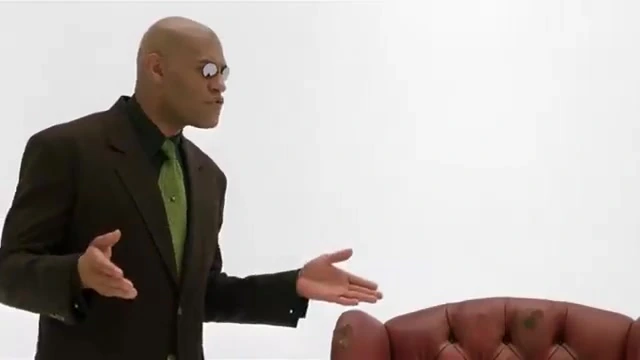
Morpheus in the Construct. Still from The Matrix (1999), Warner Bros.; taken from the supplied scene clip.
Cypher knows the steak is simulated. He eats it anyway.
That dinner in The Matrix puts a difficult question on the table. If an experience feels convincing, how much does its origin matter? The taste reaches him. The pleasure reaches him. What he wants to escape is the knowledge of how it works, and the much less comfortable life waiting outside.
The Wachowskis' 1999 film makes discovering the truth look exhilarating. Cypher reminds us that living with it can be exhausting. Knowing how a prison is built does not automatically make someone want to leave.
That tension connects The Matrix to a much wider conversation across anime, games and cinema. Artificial worlds can shelter people, deceive them, train them or give them somewhere to belong. Once the construction becomes visible, the story still has to decide what its inhabitants are owed.
There are premise spoilers below, including discussion of the original Matrix. The later stories' endings remain unspoiled.
The spoon changes the problem
The spoon scene is a small demonstration of what makes The Matrix work. Neo approaches an apparently solid object with the expectations he has brought from ordinary life. The boy's explanation redirects his attention to the system producing the object: “There is no spoon.”
Within the film's fictional rules, that distinction has practical consequences. Neo cannot understand what he can do until he understands where he is. The action gives the philosophy a physical form. Learning changes how a body moves through a room.
The Matrix's construction also has an owner. The machines control the environment while the humans inside experience it as everyday reality. That arrangement makes knowledge political. Who can change the rules? Who is allowed to see them? Who benefits from everybody else carrying on as usual?
Cypher's dinner brings the cost of that knowledge back into view. Comfort becomes something he is prepared to bargain for. His longing is understandable; the betrayal attached to it remains his responsibility. The film gives him a recognisable temptation without making his choice harmless.
That is a more interesting conflict than simply sorting people into the enlightened and the fooled. Understanding something gives you decisions to make, and other people have to live with the consequences.
What simulation theory actually argues
The popular question of whether our universe could be a simulation needs a little separation from the film that made it so easy to picture.
In his 2003 paper, philosopher Nick Bostrom argues that, given his assumptions, at least one of three broad possibilities holds: humanity is very likely to disappear before reaching a sufficiently advanced stage; advanced civilisations are extremely unlikely to run large numbers of ancestor simulations; or we are almost certainly simulated ourselves.
The reasoning depends on possibilities we have not established, including computers supporting conscious experience and future civilisations choosing to create vast populations of simulated people. It does not identify which of the three possibilities is true. Bostrom's later explanations make that limitation explicit.
That leaves room for a serious philosophical question without turning a feeling of déjà vu into a discovery about the universe. In his FAQ, Bostrom is himself sceptical of reported “glitches”. A strange experience needs investigation before it needs a cosmic explanation.
Fiction has a different freedom. It can declare the simulation real and follow the consequences. Its answer belongs to the world the storyteller has constructed.
Anime makes the uncertainty personal
Ghost in the Shell, directed by Mamoru Oshii and released in 1995, approaches reality through Motoko Kusanagi, a cybernetic investigator pursuing the Puppet Master. Its questions about identity arise inside an interconnected world where the boundary between a person and a machine is already difficult to maintain.
Placed beside The Matrix, it shifts the emphasis. Neo needs to discover what kind of world he inhabits. Motoko's situation invites us to ask what makes the inhabitant a person in the first place. If a body can be technologically remade, where should identity be located? What would count as enough continuity to call someone the same self?
These are related questions rather than identical fictional explanations. Ghost in the Shell does not need to place its entire universe inside a computer to make personhood uncertain.
Serial Experiments Lain brings that uncertainty into the relationship between a schoolgirl and the Wired, its networked digital realm. Communications from a dead classmate draw Lain towards a domain whose presence increasingly unsettles the distinction between online existence and the world around her.
The comparison becomes unsettling at an ordinary scale. A version of you can exist in other people's messages, recollections and expectations. You cannot supervise every encounter with it. Lain stretches that problem into science fiction, asking how a person might remain coherent when the network can make identity feel distributed beyond the body.
Read together, these works give the artificial-world question an intimate consequence: the place may be uncertain, but so is the person trying to find their way through it.
Games put your hands inside the argument
Games have an unusual advantage here. We enter them knowing somebody built the world. We accept a button that makes us jump, a barrier that stops us, a task that tells us where to go. The construction is part of the agreement.
The Talos Principle turns that agreement into a philosophical problem. Croteam's puzzle game places ancient ruins beside advanced technology and asks the player to respond to a creator's instructions. Its own description invites questions about identity, purpose and whether to have faith or ask further questions.
The puzzles make this more than dialogue to read between events. You investigate an arrangement, test a possibility and discover why it succeeds or fails. Understanding is something you practise. Meanwhile, the larger setting asks how readily you accept the authority that supplied the task.
That is a particularly effective use of a game. Following instructions is often how we make progress. Here, obedience itself becomes available for examination. Solving the next puzzle and understanding why you are solving puzzles can become different activities.
The pleasure of working something out survives the knowledge that a designer arranged it. A constructed experience can still ask something real of your attention.
Cinema can build the cage without a computer
The Truman Show offers a useful comparison. Truman's hometown is a television set, and the people around him are performing roles he does not know they have. The deception concerns the organisation of his life rather than a computer generating the entire physical world.
That difference sharpens the ethical problem. A place can contain solid buildings and still withhold the truth from the person living there. The people managing Truman's surroundings have decided what he should encounter, what he should fear and how much he should be allowed to know.
Watching from outside does not make the audience neutral, either. His restricted life is their entertainment. The viewer can enjoy the programme while forgetting that its central participant never agreed to the arrangement.
Set alongside The Matrix, the question becomes who gets to author somebody else's normality. The machinery can be a computer system or a television production. In either case, a convincing environment can conceal a profound absence of consent.
What still matters inside a made world
Philosopher David Chalmers offers a useful complication in The Matrix as Metaphysics. He argues that discovering a Matrix-style computational foundation would not necessarily make ordinary objects or most of our beliefs about them unreal. It could change our account of what the world is made of.
That argument challenges the easy slide from artificial to worthless. It also helps separate two problems: the underlying construction of a world, and the treatment of the people within it. Deception, coercion and suffering still require an answer.
Our existing Matrix Short begins with questioning what we have been shown. This essay takes the next step: what should we do once our understanding changes?
For Infinity Illustrated, The Matrix is a defining influence because it makes revision feel possible. A conviction can be examined. A rule can be traced back to whoever established it. Something treated as inevitable can become a decision someone made.
Embrace Tomorrow means making room for that correction without abandoning our obligations to one another. Being mistaken about the world need not make caring for someone a mistake.
We may never get Neo's clear view of the machinery. We can still ask who benefits from a familiar explanation, look for evidence that could change our minds, and take other people's experiences seriously.
The possibility of a constructed world makes those responsibilities more interesting. It gives us no reason to put them down.
Infinity Illustrated.
Embrace Tomorrow.